Geri Reilly Real Estate Logo

Geri Reilly

Safe Winter Driving

For many of those in Vermont, the recent snow storm came as an unwelcome and dangerous surprise. Snow froze quickly into ice making it difficult for even those with snow tires already on their cars. For everyone else it was a wakeup call to just how severe the upcoming winter may be. Read on for helpful tips to ensure safe winter driving.

All Season Vs. Winter Tires

Peaked Mountain Symbol

Look for this symbol when buying Winter tires.

If you're looking to buy some more weather appropriate tires you may be wondering if All Season tires may be the efficient fit. If you're living in a place that gets a lot of snow and ice, like Vermont, experts warn against this seemingly cost efficient option. The primary problem is that All Season tires are meant to be adequate for all weather, and optimal for none. The tread won't be as aggressive as that on a Winter tire and the rubber used in them will not be as flexible in the cold.

Winter tires use specialized rubber compounds designed to stay flexible in cold temperatures and deeper treads that are less likely to fill up with snow. Tests show that cars with Winter tires consistently stop ½ to a full car length shorter than those with All Season tires, even at a mere 15mph.

4 Wheel Drive

I have an SUV with 4 Wheel Drive, doesn't that make me safer? Unfortunately not. 4WD will help you get started from a dead stop and will better accommodate tight corners but will not help the car slow down any faster or smoother.

Picking Quality Tires

So how will I know if I've found a good Winter tire? Certain tires are designed for severe winter conditions and better traction on snow. Tires meeting the strictest standards are marked with a peaked mountain symbol. The right time to install your Winter tires is once the temperature holds regularly at or below 50 degrees Fahrenheit. Take them off when the temperature holds at higher than 50 degrees. Keep in mind that waiting until the first snow lumps you in the same category as most other drivers and will cut down on the amount of inventory and savings that will be available to you.

Winter Driving in Vermont

Picturesque and potentially dangerous. Enjoy peace of mind while driving by making sure you're prepared and safe!

Studs

Many Winter tires accommodate studs, something you may pay extra to have added. Studs are ideal if you intend to spend much of the winter driving up mountains, such as for skiing, or on back country roads. For city driving they are an unnecessary expense.

Safe Winter Driving

Whether you have decided to employ Winter tires or not, there are some winter driving tips you should keep in mind.

  1. Be prepared during tough snow driving and keep the following in your car: jumper cables, tire chains, flares, blankets, food, gloves, boots, a flashlight, a cell phone, a first aid kit, an ice scraper, and a towing cable.
  1. Driver slower, especially when encountering corners and downward hills.
  2. Check your brakes and steering when you first get on the road, be wary of black ice that can unexpectedly form on bridges, overpasses and intersection.
  3. Don't use cruise control or follow other cars too closely.
  4. If you feel yourself start to skid, release the accelerator and gradually steer in the opposite direction in which you're skidding. Do not use your brakes. If you end up overcorrecting and skidding in the other direction then gradually steer back the other way.
  5. If you get stuck in snow and want to try to get yourself out, first clear snow away from around your tires. Then gain traction by laying sand, salt or traction mats wherever you will be driving, not just directly around your tires. You should not try to drive out - slowly. Trying to accelerate too quickly will dig a deeper hole around your tires and pack snow into the wheel well. Try rocking the car back and forth if you are having difficulty just driving out.
  6. It's always a good idea to have a tow or roadside assistance service on speed dial, AAA is a relatively inexpensive service that you may find yourself returning to all year round.

Keep up on your local weather forecast and try to avoid driving in especially serious conditions. The best strategy for staying happy and safe during a brutal Vermont winter is to always be mindful, careful and prepared. We wish you a joyous holiday and winter season!

Building Equity in Your Home

Buying a home is a great way to improve your family's financial security. The main way this happens is through home equity.

What is equity?

The equity in your home is the difference between its market value and the balance on your mortgage. In other words, equity is the wealth built up in your home over time. If you could sell your home for $400,000 and the amount you owe on your mortgage is only $100,000, then your equity is $300,000.

Equity is built in three ways: down payment, mortgage payments, and market gains. Making a down payment is a reduction in your mortgage amount, giving you instant equity in your home. Making house payments increases your equity as well, since every payment includes a portion for interest and a portion that reduces the amount of your loan amount (called the principal). Over time the amount of your payment that goes toward the principal increases and helps to build your equity even faster.

Market Value Appreciation

You also build equity as your home gains in value over time; this appreciation in market value can mean that you build equity simply by owning your home. Of course there are no guarantees that real estate values will continue to rise, but historically this has been the case. If your home is worth $250,000 and the market appreciates by 5% each year then after just two years you could add $25,000 in equity simply by living there.

Equity doesn't have to be an abstract concept; you can turn it into cash by applying for a home equity loan which uses the equity in your home as security and in many cases allows you to deduct the interest from your taxes, just as you do with your first mortgage. Home equity loans are usually a cheaper source of funds than other types of credit (credit cards, for example) and can be an excellent way to pay for home renovation or to consolidate debt.

Pick up more Real Estate tips at http://www.buyvtrealestate.com/geri-reilly-real-estate-tips/

Enhanced by Zemanta

Decorating for a Small Space

For first time homebuyers and baby boomers looking to downsize, condos and smaller homes can be a viable option. 

They require less maintenance and support a more financially and environmentally sustainable lifestyle making them attractive to both the budget conscious and those with an active, socially aware lifestyle. Still the question inevitably arises, where do I put all my stuff? Here are some tips for decorating and visually "enlarging" small spaces.

These cellular shades add style but not bulk!

Windows

When dressed correctly, windows can be a strong tool for visually enlarging a small room. Leave windows bare or dress them with draperies that match the color of the walls to open the space. For privacy, install simple shades or blinds that can be pulled out of the way during the day. In addition, to make windows seem taller, hang draperies just below the ceiling; to widen windows visually, extend draperies beyond the window frame.

Furniture

If your space is too small to meet all your needs, make it multi-task. A sofa bed is a great way to accommodate guests without a guest room. For more storage hang floating wall shelves in favor of standing shelves. Use an ottoman with storage inside to hide away papers and knick-knacks. And choose a drop leaf table with wheels that can expand to accommodate more diners or partially collapse and be easily moved out of the way when not in use.

Small spaces are quickly overwhelmed by large or overstuffed furnishings. Choose neatly upholstered pieces with compact frames and slimmed-down, leggy pieces without skirted bottoms that allow you to see through them to the walls and floors.

The epitome of small space comfort, a day bed.

Create a sense of movement and make a room feel larger by floating big furnishings away from walls. Allowing air space between the wall and seating pieces gives the impression of depth and more room. Another option is to place furniture in the corners of rooms at an angle and use the space behind to stash baskets of extra linens, toys, crafts supplies, or whatever else you need to store.

Add round elements to a small, square room. Soft edges, instead of rigid corners, turns small into cozy.

Accessories & Color

To give a room the illusion of spaciousness use white or another light color on the walls. White surfaces bounce light around the room, keeping a small space feeling bright and open. Use dark accent pieces to anchor the space without constricting it. And don't underestimate the power of a few well placed mirrors!

When it comes to small spaces, too many colors can be chaotic. Select a few and stick with them. Painting the single wall a dark color also creates the illusion of

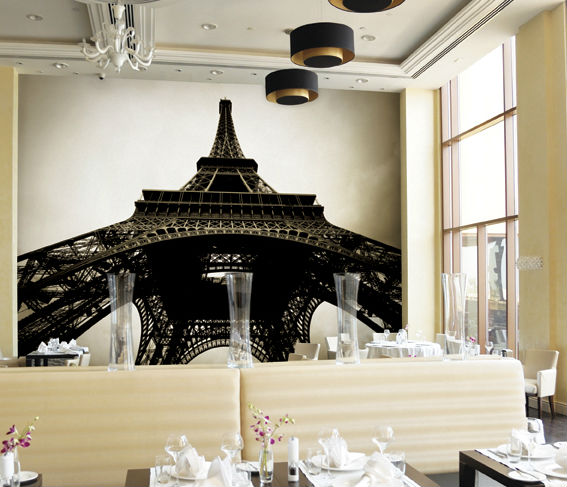
Go big and go...home!

depth in the room. And be careful not to fill a small room to the brim with accessories. A handful of well-chosen and well-placed accessories is all it takes to give a small room a layer of sophistication.

One oversize piece of art can create a strong focal point that actually opens a small room. To the contrary, multiple pieces scattered around the room make the room feel cluttered and small.

Small spaces have every bit as much potential as larger spaces, they just require a different mindset. But what they lack in size they make up for in comfort and coziness, so have fun and explore all the creative ways there are to dress up and diversify the functionality of your home!