
Geri Reilly Real Estate Logo

Marketing

William Levitt: Father of the Suburb

Look outside your window. If you see a house to your left, right and across the street then you have Alfred Levitt and his father, William, to thank. Credited as the fathers of modern American suburbia, they were entrepreneurs and builders that would forever alter the way we build and purchase property.
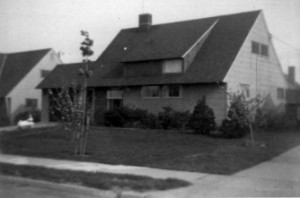
 

Levitt House

A typical Levitt house of the late 1950s


Before World War II, suburbs did not exist the way we see them today. Plots of land were bought, built on and sold but whole communities were not give a single title and there was no unification. Being men of vision and development experience, William and Alfred Levitt made their pre-World War II riches by building upscale housing on and around Long Island, New York. Levitt & Sons became known as the premier developer in that area, buying up farm land and selling homes to the upper middle and wealthier classes. During and after his service as a Navy lieutenant, William Levitt observed a crisis in housing.  Young soldiers were returning with hefty government loans looking for new homes in which to raise their families. They needed something affordable and they needed it quick. William Levitt's solution was to mass produce inexpensive homes that would be in close proximity to each other.

In 1941 the Levitts were granted a government contract to build 2,350 homes for defense workers in Norfolk, VA. With the help of his father, William and his team went on to build an even larger community on Long Island in 1947 which included 17,000 homes all on only 7.3 square miles of land. They called this Levittown and maintained rigorous parameters, each

property had exactly 2 trees in its front yard spaced a specific amount apart. They were either Cape Cod or Ranch in style, 750 square feet and consisted of 2 bedrooms, a living room, a kitchen and an unfinished second floor with no garage. All homes came with a washing machine and television included.

 

Levittown, NY, October 1947

Levittown, New York, October 1947


To keep production costs low, strict standards had to be maintained. Specialized teams were created where each individual had one very specific task that they would complete on each house in a predetermined order and at  a specific pace. First cement was mixed and lumber was cut on-site. Then the carpenters, tilers, painters and roofers arrived in sequence. This allowed the Levitts to build up to 180 houses a week while maintaining relatively excellent quality. To save money on materials, they bought forests and constructed their own saw mills. They purchases appliances directly from manufacturers and even made their own nails. At the beginning, these houses sold for between $6,995 and $8,000, easily affordable with a mere $58 down payment.

The Levitts continued to build suburban communities in Pennsylvania, Puerto Rico and New Jersey and ultimately built more than 180,000 houses. At one point they boasted a production record of one suburban house every 16 minutes. Standing among economic greats like Henry Ford and his automobile assembly line, the Levitts did not just sell houses, they manufactured and marketed the American Dream of stability and security and sold it to Americans at a price they could easily afford.

 

eco pod house

Pod House by Hans Haus with 4 rooms that rotate into view from a cylinder in the center


In 1968, Levitt & Sons was sold to ITT International Telephone and Telegraph for $90 million. Still relatively affordable, though surely showing their age, Levitt houses were still selling for around $155,000 in the late 1990s. But the concept of the suburb has remained an important and desirable fixture in housing markets ever since with new developments being created all the time.

With the emergence of eco-friendly "pods" and extra cost and space efficient homes now growing in popularity, it is clear that the legacy of the Levitt family lives on.

Home Mortgage Help: You Can Afford that House!

Thinking about applying for a home loan? Running to the closest bank is not your only option. Within conventional financing there are many options and outside of that, there is also VA (Veterans Affairs) and FHA (Federal Housing Administration) mortgage support. And that doesn't even include all of the government assistance programs out there! Here's some helpful tips.

Conventional Financing

Conventional financing allows you to tailor your loan to your needs and interests. One option is fixed rate (FRM), which means the interest rate will remain the same throughout the life of the loan. This is also called a "conventional mortgage". The alternative is an adjustable rate mortgage (ARMS) which adjusts to the national economy. These usually start with better rates than fixed rate mortgages to compensate the borrower for taking a greater risk. Then there are hybrid FRM/ARM mortgages where the loan can be converted from one form to another after a certain period of time.

Another personal stamp you can put on a loan is its length. The standard length for a loan is 30 years but reducing it to 15 years will substantially lower the amount of interest you will be paying while only slightly increasing the amount of the loan payment. You can also choose an accelerated payment program, which allows you to make payments bi-weekly instead of monthly, reducing the life of the loan as well as the amount of interest paid overall.

Lastly, you can enlist a family member or friend to participate in a buy-down whereby they help reduced your mortgage payments by paying some portion of them for you in the initial years of the loan. This can help you buy a house you might not otherwise have been able to afford.

Conventional financing usually has requirements for credit scores, income and minimum down payments of between 5 and 20 percent. Keep in mind you will need excellent credit to qualify for the best rates but you will face fewer hurdles than you would going with VA, FHA or government assistance programs.

VA Financing

A VA home loan is one backed by the U.S. Department of Veterans Affairs. It has unique qualifications and  advantages. To qualify you must meet one of the following requirements: o Have served 181 days during peacetime (Active Duty) o Have served 90 days during war time (Active Duty) o Have served 6 years in the Reserves or National Guard o You are the spouse of a service member who was killed in the line of duty


No matter what your financial situation, homebuying can be within your reach!


The benefits are that you can purchase a home with no money down, the only stipulations being that the purchase price doesn't exceed the appraised value and the seller will pay the closing costs. The VA guarantees the entitlement to a loan from a private lender, it does not itself loan out the money. Because of this, the veteran will still need to qualify based on income and credit score. The veteran also has the restriction of not being able to refinance and VA charges an upfront fee ranging from 2.15 to 2.4 percent, which helps pay for the cost of the VA loan and can be rolled into the loan or paid by the seller. However, a VA loan is a great option for qualified veterans because it allows them to purchase a house without any upfront costs.

FHA Financing

A FHA home loan is one backed by the Federal Housing Administration, which provides support to the borrower should they default on the loan. This added insurance allows the lender to loan more funds than they normally would to the buyer. Because of this, FHA loans are ideal for people with poor credit, moderate debt-to-income ratios and for people who do not have a lot of money for a down payment. Stipulations of FHA backing require the borrower to make a minimum 3.5 percent down payment and there are limits to how much they can borrow. However, this down payment rate is still much lower than is usually required with conventional financing, there is no minimum credit score requirement (though the lender may still uphold their guidelines), and being backed by the FHA usually means that lender will give consideration to the overall picture of  the borrower's credit as opposed  to singularly relying on automated underwriting software.

Special Circumstances

Certain personal circumstances can impact your loan application and are things you should discuss with your loan officer up front. These are:

  • Being self -employed
  • Being employed by a relative
  • Claiming any of the following forms of income: social security payments, retirement payments, or welfare or disability income
  • Being unemployed or a full-time student
  • Owning savings bonds

Read what will be required of you for each situation

Down Payment Resource

Still looking for another option for assistance with a home loan? Down Payment Resource is a collection of all government funded buyer assistance programs. It identifies properties that are eligible for these programs through the Multiple Listing Service, a database of properties on the market (excluding for sale by owner properties unless the seller hires a Realtor to list it), and provides the guidelines for the borrower to qualify. This service is currently only available through Realtors so contact Geri Reilly to learn more.

With interest rates down and so many assistance programs available to homebuyers, it's a great time to find the home of your dreams. When you're ready, contact your friends at Geri Reilly Real Estate, we'll be happy to help!


Some helpful links:


For more information about a VA home loan go to http://www.benefits.va.gov/homeloans/

For more information on a FHA loan go to http://www.fha.com/

For more information on Down Payment Resource go to http://www.workforce-resource.com/

For more information on various types of mortgages and loan programs we recommend contacting The Mortgage Guys at Spruce Mortgage: http://www.vermontmortgageguys.com


11 Steps to Prep Your Home for Vacation


Vacation Prep

Burlington Cape


Rest easy on your next vacation, knowing your house is in order--and ready for your return. If your home is on the market, you can follow these tips so Realtors can continue to show your property while you are away. These easy preparations will give you peace of mind so you can relax, enjoy your vacation, and have a smooth return. They may even land you a buyer while you're on vacation!

"It's hard to remember from trip to trip everything you need to do to get your house in order," says Laura Leist, certified professional organizer and owner of Eliminate Chaos, in Seattle. "Have a checklist of what needs to be done, and start planning a week or two in advance."

The below departure checklist will make it easier to get your home shipshape so you can enjoy a vacation free from worries. The return checklist will ease your transition back to the real world.

Prepare for Your Departure

  1. Ready your pets: Give the pet sitter or boarding facility detailed care instructions. Make sure the one you choose has plenty of your pet's favorite foods, treats, toys, medicines and other supplies on hand.
  2. Clean out the fridge: Throw away food that will expire while you're gone.
  3. Tackle the laundry: Wash and put away laundry before you leave.
  4. Prep your plants: Ask a friend or neighbor to water your plants, and be sure to leave multiple lists of all plants and their locations. Otherwise, invest in self-watering plant stakes.
  5. Spray for bugs: Spray an insecticide in key areas so bugs will steer clear while you're gone.
  6. Unplug and reset the thermostat: Temporality adjust the thermostat so the air-conditioner or heater won't waste energy by running in an empty house. Unplug unnecessary appliances in preparation for your absence.
  7. Hold mail and newspapers: A call to your post office and news carrier will put your mail and newspapers on hold so they won't pile up in front of your house while you're gone.

Prepare for Your Return

  1. Plan for your breakfast: Before you leave, stock your kitchen with cold cereal, coffee and a container of shelf-stable milk so your first meal back will be hassle free.
  2. Keep the house smelling fresh: Plug in a scented gel warmer in your favorite fragrance, and you and prospective buyers be greeted by freshness when you open the door.
  3. Change the sheets: Make up beds with fresh sheets for a welcoming first night.
  4. Tidy the house: Sweep or vacuum floors; Do the dishes; Wipe down counters in the bathroom and kitchen with an all-purpose cleaner; Give toilets a quick clean.

In addition to creating a smooth transition back from your vacation, these steps will ensure that your house is in tip-top shape and ready to show while you are away. For more tips on how to prep your home to sell, check out Geri's Real Estate Tips.

52-54 of 54 Posts